A viticultural rarity that remains a reality at Santadi
In the language of wine, some words carry an entire history within them. Ungrafted is one of them.
On the one hand, it speaks of a rupture in the history of European viticulture. For us, it means the survival of what was lost elsewhere.
When Europe lost its roots
To understand the meaning of ungrafted vines, we must go back to the second half of the nineteenth century, when phylloxera, an insect of North American origin, devastated around 80% of European vineyards.
It was first observed in 1854 by the entomologist Fitch on wild vines in North America. When it took hold in European territories, Vitis vinifera had no adequate defences.
The impact was dramatic: entire wine regions were destroyed. It was not only a viticultural crisis, but a cultural one.
How phylloxera acts
Phylloxera feeds on the plant’s sap, attacking leaves and roots. The most delicate point, however, is the root system. When it is compromised, the plant decay until it dies. And the insect, once one vine is exhausted, moves on. In compact soils it can even advance underground, passing from plant to plant.
American vines had, over time, developed root-level resistance. European vines, on the other hand, were extremely vulnerable.
The lasting solution: grafting
To save European viticulture, a lasting and effective solution was found: graft European varieties onto American rootstock, naturally more resistant to the parasite.
From that moment on, almost everywhere, the vine continued to live in this way. American rootstock below, European identity above. A necessary choice, which made it possible to rebuild the vineyards of Europe.
Why sand changed our story
Beyond grafting, there are environments naturally hostile to phylloxera. Among these are sandy soils.
In sand, the subterranean tunnels dug by phylloxera do not hold. Their walls collapse and the insect is forced to rebuild them continuously. In addition, the microscopic structure of sand, fine and angular, causes microscopic abrasions that hinder its survival.
This is how, in some areas, the European vine remained intact, without grafting. And when this happens, it is not a technical detail. It is a rare heritage.
So what is an ungrafted vine?
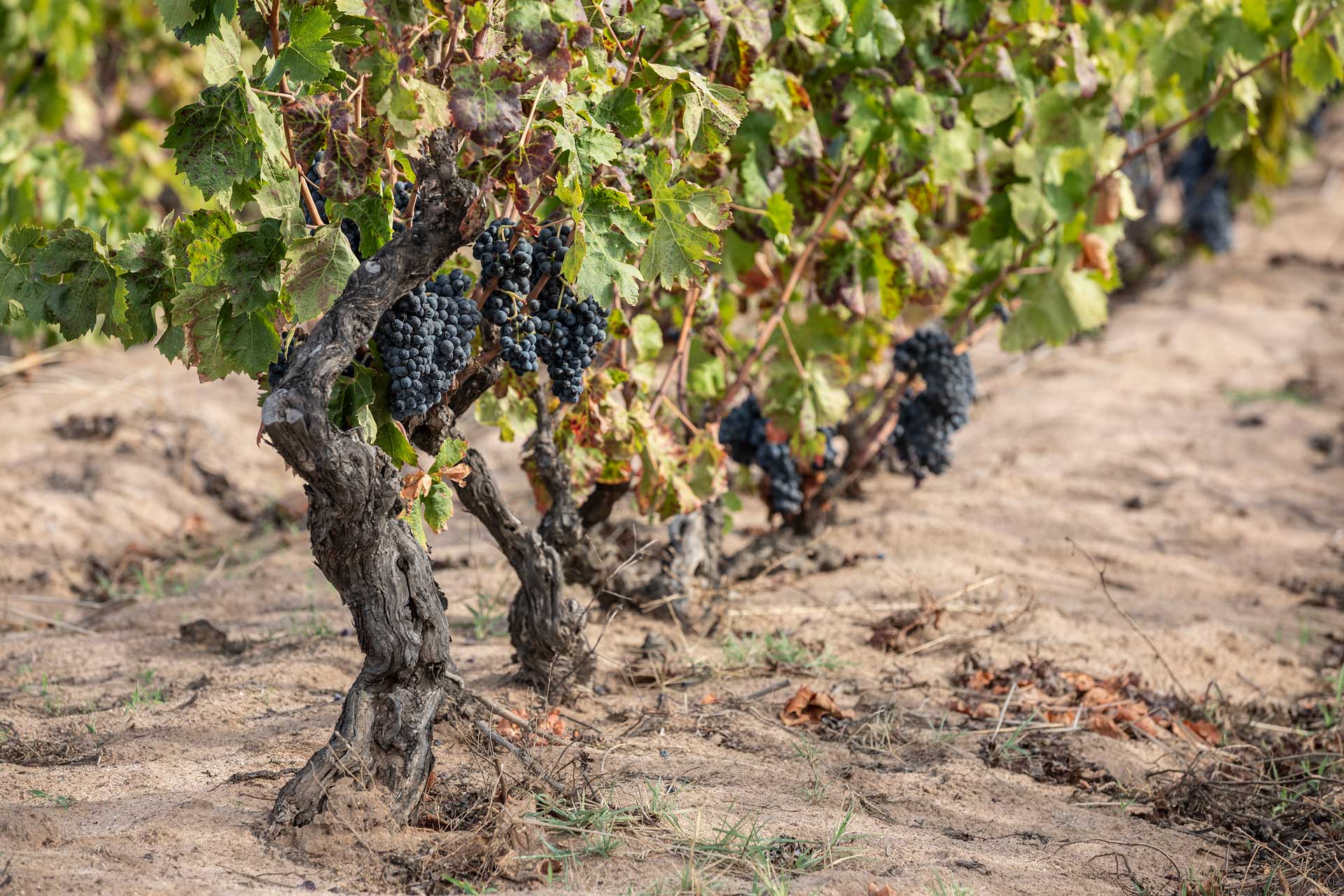
An ungrafted vine is a plant on its own roots. Its roots and trunk belong to the same European vine.
In other words, it is the natural and original form of Vitis vinifera, now surviving only in very few areas.
It is the form that existed before phylloxera; the form that today survives as a rare, almost romantic exception.
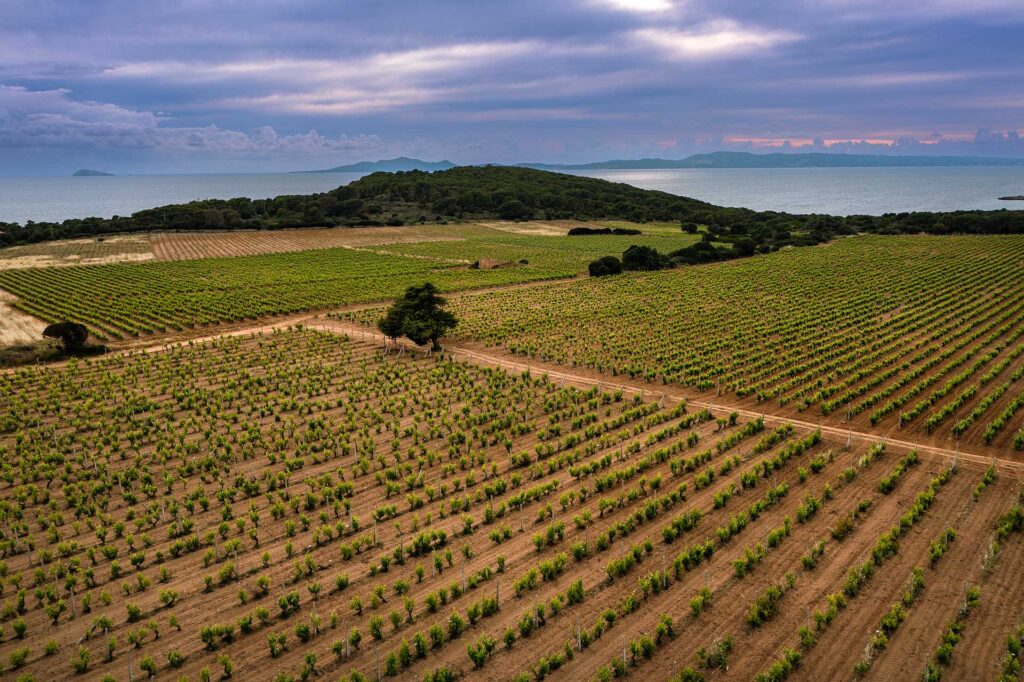
The largest area is in Sardinia. Santadi stands at its centre
The largest area of ungrafted vines on the European continent is in Sardinia, covering around 450 hectares. Within this treasure, thanks to its members, Cantina Santadi safeguards around 150 hectares: the largest single area on the island.
What this means for the vine
When a vine retains its original roots, it also preserves a different relationship with time. The roots are longer-lived, and the plant tends to manage itself with greater balance, without excessive vegetation and without slipping easily into overproduction.
It is a balance that is not imposed, but accompanied. The same balance that, year after year, makes the vineyard increasingly capable of adapting, even as the seasons change.
An indelible signature in taste
Ungrafted vines are plants, with thick trunks and sinuous branches that resemble sculptures carved by decades, still trained as bush vines, a form of cultivation that preserves the technical memory of the past.
Vines that grow according to their own rhythm, in a direct relationship between plant and soil.
In the wine, this is reflected in a finer, more precise texture. The aromas are clearer, without unnecessary embellishment. The fruit remains pure, precise and clearly defined. The tannins, especially in Carignano, are naturally silkier, never aggressive.
A cultural treasure to protect
The rarity of this heritage is such that the “Francs de Pied” Committee, with the support of Prince Albert II of Monaco, has begun a process to evaluate the candidacy of ungrafted vineyards as a UNESCO World Heritage Site.
For those who love wine, this is one of those cases in which the word “rarity” stops being marketing language and returns to what it is: an objective fact.
Gestisci Consenso
Per fornire le migliori esperienze, utilizziamo tecnologie come i cookie per memorizzare e/o accedere alle informazioni del dispositivo. Il consenso a queste tecnologie ci permetterà di elaborare dati come il comportamento di navigazione o ID unici su questo sito. Non acconsentire o ritirare il consenso può influire negativamente su alcune caratteristiche e funzioni.
Funzionale
Always active
L'archiviazione tecnica o l'accesso sono strettamente necessari al fine legittimo di consentire l'uso di un servizio specifico esplicitamente richiesto dall'abbonato o dall'utente, o al solo scopo di effettuare la trasmissione di una comunicazione su una rete di comunicazione elettronica.
Preferenze
L'archiviazione tecnica o l'accesso sono necessari per lo scopo legittimo di memorizzare le preferenze che non sono richieste dall'abbonato o dall'utente.
Statistiche
L'archiviazione tecnica o l'accesso che viene utilizzato esclusivamente per scopi statistici.L'archiviazione tecnica o l'accesso che viene utilizzato esclusivamente per scopi statistici anonimi. Senza un mandato di comparizione, una conformità volontaria da parte del vostro Fornitore di Servizi Internet, o ulteriori registrazioni da parte di terzi, le informazioni memorizzate o recuperate per questo scopo da sole non possono di solito essere utilizzate per l'identificazione.
Marketing
L'archiviazione tecnica o l'accesso sono necessari per creare profili di utenti per inviare pubblicità, o per tracciare l'utente su un sito web o su diversi siti web per scopi di marketing simili.