Sulcis is not merely a geography.
It is time, matter and memory.
It is the first land to have emerged in Sardinia, an ancient fragment of Europe where the rocks speak of remote eras and the wind continues to shape dunes, hills, woods and silences.
Here the light falls vertically, the Mistral crosses the fields unhindered, and the sea is a constant presence even where it cannot be seen. Everything is born from this combination.
Walking through Sulcis means crossing millions of years in just a few kilometres.
Metamorphic rocks, basalt plateaus, limestone soils, dunes moving like motionless waves.
The caves of Is Zuddas preserve natural structures that is sculpted by time.
The Castle of Acquafredda watches from above, a sentinel of a history that predates written memory.
Here the land is not a backdrop. It is the protagonist.
In Sulcis, the rural home is called furriadroxiu: a place to return to.
Enclosed courtyards, wood-fired ovens, grain stores, stables, pergolas.
Around these spaces, an essential, self-sufficient economy was built, founded on shared work, barter and solidarity.
Beside the furriadroxiu stands the merau.
The pastoral dimension, the mountains, the pinnetta of stone and wood, the flocks, the slow rhythm of the seasons. Here community is not an abstract concept. It is a concrete organisation of space and life.
Bread is called s’alimentu primu.
The first food, the foundation.
Millstones, flours, expert hands kneading. Ovens lit at dawn.
Bread as a measure of dignity and survival.
The milk of the flocks becomes distinctive cheeses, made through ancient gestures.
Honey, considered among the finest in Italy, carries the scents of the Mediterranean scrub.
Olive oil and olives speak of the same light that nourishes the olive trees.
The Sulcis cousine is sincere, intense, linked to land and sea.
It is spiny artichoke, legumes, bluefin tuna from the tuna fisheries, a simple, austere sweetness.
Every flavour is memory transformed into a daily gesture.
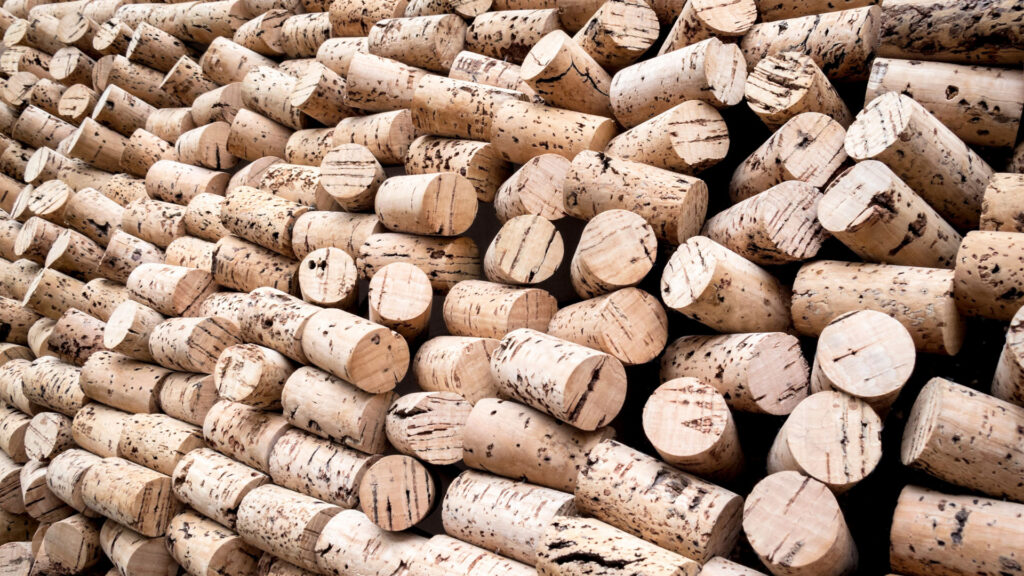
Cork oaks draw the landscape.
Their bark is removed with precision, leaving the trunk alive and able to regenerate.
Cork is not merely an industrial raw material.
It is a culture of craftsmanship, manual skill and a widespread economy.
Alongside cork, iron takes form in knife-making.
Gold and silver intertwine in filigree.
The hands of artisans transform essential materials into objects of identity and belonging.
Here beauty is born from function. And function becomes symbol.
From lambs’ wool comes orbace, a compact, dark, resistant fabric.
Carding, spinning, dyeing with roots and bark, the loom. Knowledge handed down from generation to generation.
Traditional costumes tell the same story.
Every fold, every embroidery, every colour has a precise meaning. These are garments that speak of role, community and belonging.
Much more than postcard folklore. They are memory worn.
Sulcis is also an underground world.
The mines have carved the land and shaped recent history.
Carbonia, founded around coal, is working-class memory, sacrifice, migration.
Black gold marked generations, leaving scars and pride.
It is an integral part of the region’s identity.
Sulcis speaks Sardinian and Italian.
In markets, squares and processions.
Religious festivals cross the fields, pass through the vineyards, mark collective time.
Rural life is not isolation: it is a different form of centrality.
Here time does not run.
It settles.
Within this weave of geology, work, bread, fabrics, mines and sea, wine finds its measure.
It is not the only expression of Sulcis.
It is the one that can hold its essence in liquid form.
In the glass, there is light, wind, sand and memory. The farmer’s gesture, the silence of the woods, the sound of the loom and the dust of the mines all coexist there.
The terroir of Sulcis is not merely a set of pedoclimatic characteristics.
It is a way of inhabiting the world.
And those who live this land know it: every wine born here carries with it a Mediterranean vision: rooted and open, ancient and alive.